Strait of Hormuz revives Iran’s neglected trade corridors
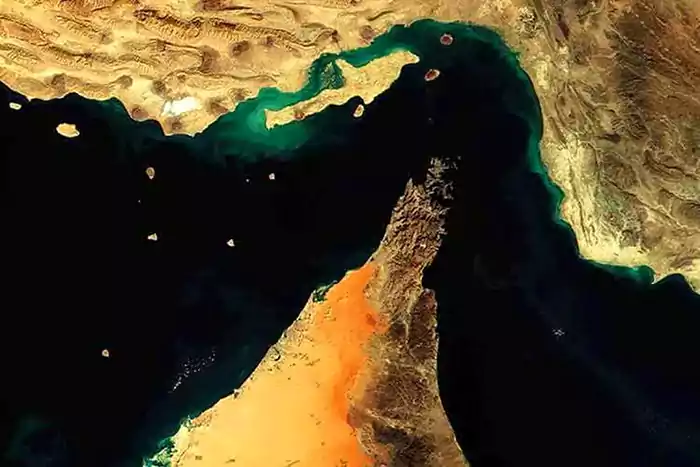
Disruptions in the Strait of Hormuz shifted Iran’s trade route toward neglected land and rail corridors, a path now activated from Pakistan and Iraq to China and Central Asia.
According to Mehr News Agency, the disruptions in commercial traffic through the Strait of Hormuz have not only affected Iran’s maritime trade but have also redirected a portion of regional trade flows toward alternative land and rail routes , an event that once again highlights Iran’s geopolitical importance in the region’s transit equations.
Over recent decades, maritime trade has become one of the main pillars of the global economy. According to international estimates, more than 80% of global goods trade is conducted via sea. Low transportation costs, the ability to move large volumes of goods, and direct access to international waterways have kept sea routes as the main artery of world trade.
In this context, Iran, due to its geopolitical position, has always been considered a key transit player in the region. Its location at the junction of the Persian Gulf and the Sea of Oman in the south, combined with simultaneous access to the Caspian Sea in the north, has created a rare capacity to transform Iran into a transit hub between Asia, Europe, the Caucasus, India, and the CIS countries.
* Washington’s failure to enforce a naval blockade of Iran
However, the escalation of tensions in the Strait of Hormuz following the disruptions that began on April 13, 2026, after the failure of Iran-US peace talks in Islamabad, caused a portion of trade between Iran and the region to shift from maritime routes to land and rail corridors, a change that has revealed, more than ever, the necessity of diversifying the country’s trade routes. The Strait of Hormuz, as one of the world’s most sensitive energy and trade chokepoints, is now at the center of geopolitical tensions.
This has led Iran and its trade partners to pay greater attention to activating neglected transit capacities in land, rail, and even alternative maritime routes.At the same time, many regional and international analysts believe that a scenario of a naval blockade of Iran is not fully feasible. Iran’s geographical vastness, diversity of land and sea borders, simultaneous access to eastern, western, and northern corridors, and connection to regional transit networks are among the factors that make any complete closure of Iran’s trade highly challenging.
Nonetheless, recent conditions have shown that relying solely on traditional routes of the Persian Gulf and southern ports cannot meet the long-term needs of the country’s foreign trade. Developing land corridors, strengthening the rail network, and activating transit capacities in the north, east, and west of the country have now become a strategic necessity.
* China, Iraq, and Turkey: Iran’s main trade partners
Iran currently conducts trade with more than 100 countries, but China remains Iran’s largest export partner. According to data from Trade Data Monitor, in the year ending October 2025, China imported more than $14 billion worth of goods from Iran, indicating continued economic interdependence between the two countries.
After China, Iraq ranks second with approximately $10.5 billion in imports from Iran. The United Arab Emirates and Turkey are also among Iran’s most important export destinations. Meanwhile, trade between Tehran and Ankara has been on an upward trend over the past year, with Iran’s exports to Turkey rising from $4.7 billion in 2024 to $7.3 billion.
* Activation of alternative routes following Strait of Hormuz disruption
In response to the restrictions imposed in the Persian Gulf, Pakistan announced the reopening of six key land routes for transferring goods to Iran — a move that alleviated a significant portion of the pressure on regional trade. According to reports, approximately three thousand containers that had been stranded due to maritime disruptions and the halt of operations at Karachi Port were brought into Iran via land routes.
This development showed that Iran’s trade can continue through alternative routes even under maritime pressure. Meanwhile, Bloomberg reported a threefold increase in rail trade between Iran and China and announced that Pakistan has activated a new transit route for third-country goods destined for Iran.
* Alternative rail-maritime routes for Iran-China trade
China, as Iran’s largest trade partner, now plays a key role in redesigning regional transport routes. Experts believe that several combined routes are available for sustaining trade between Tehran and Beijing, independent of the Strait of Hormuz.
One of the most important of these is the combined rail-maritime corridor that starts from Yiwu in China, passes through Kazakhstan and the port of Aktau, and then enters Iran via the Caspian Sea. Another route is the all-rail Central Asian corridor, which connects goods from China, Kazakhstan, Turkmenistan, and Uzbekistan to the Sarakhs border crossing and then to Iran’s rail network.
Alongside these two routes, the Pakistan maritime-land corridor has also gained special importance — a route that transports goods from China to Karachi Port and then brings them into Iran by road and rail. Additionally, some of China’s trade could enter Iran overland via Turkey and the port of Mersin.
Transport experts believe that increasing the share of land and rail trade has revealed, more than ever, the need to modernize the country’s transit infrastructure. Although parts of Iran’s rail network have double tracks and adequate transit capacity, some key routes remain single-track or outdated and cannot handle a surge in transit cargo.
* New corridor connecting China to Europe via Iran
Concurrently with Emomali Rahmon’s visit to China, the first container train on the China-Kyrgyzstan-Uzbekistan-Tajikistan route was launched — a project implemented with the participation of Chinese and Uzbek joint ventures and considered part of the strategy to develop new transit corridors in Central Asia.
Following this, Tajikistan and Uzbekistan also activated an experimental multimodal corridor: China-Tajikistan-Uzbekistan-Turkmenistan-Iran-Turkey-Europe. This route is designed to develop transport infrastructure, digitize transit, and increase border crossing capacity, and it could strengthen Iran’s position in connecting East Asia to Europe.



ارسال دیدگاه
مجموع دیدگاهها : 0در انتظار بررسی : 0انتشار یافته : 0