New horizons open for Iran-Afghanistan economic co-op during Iran’s trade delegation’s trip to Kabul
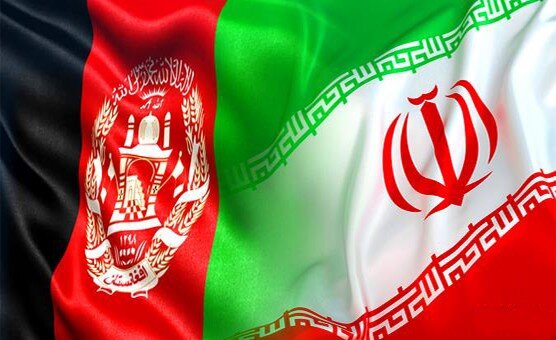
During the trip of a trade delegation from the Iran Chamber of Commerce, Industries, Mines and Agriculture (ICCIMA), led by Ghadir Qiyafeh, Vice President of the Chamber, to Kabul, the capacities for Iran-Afghanistan cooperation in mining and mineral industries, agriculture and conversion industries, technology transfer, and the creation of production and processing chains were examined.
Meetings with Nooruddin Azizi, Afghanistan’s Minister of Industry and Commerce, and Haji Akhtar Mohammad Mohammadi, First Deputy of Afghanistan’s Chamber of Agricultural and Livestock Production, along with participation in the Fifth Abu Hanifa International Exhibition and B2B negotiations between Iranian and Afghan traders, formed the main axes of this trip.
Iran-Afghanistan cooperation in mining, mineral industries emphasized
Ghadir Qiyafeh, Vice President of the Iran Chamber of Commerce, Industries, Mines and Agriculture, during the trip to Kabul at the head of a trade delegation, in a meeting with Nooruddin Azizi, Afghanistan’s Minister of Industry and Commerce, referred to Afghanistan’s mineral capacities and emphasized the development of Iran-Afghanistan cooperation in mining and mineral industries.
Azizi, referring to the issue of mining machinery, welcomed the expansion of relations and economic cooperation with Iran.
In this meeting, attended by Hamed Asgari, Deputy for International Affairs of the Iran Chamber; Mahmoud Omati, Vice President of the Mashhad Chamber; Hossein Beykzadeh, Vice President of the Karaj Chamber; Arash Alavi, member of the Board of Representatives of the Iran and Kerman Chamber; and Mohsen Amini, member of the Food Industry Committee and member of the Board of Representatives of the Iran Chamber, the capacities for economic cooperation between the two countries were examined.
Ghadir Qiyafeh, Vice President of the Iran Chamber, considering Afghanistan’s mineral capacities, emphasized the necessity of strengthening interactions and developing cooperation between the economic actors of the two countries in mining and mineral industries, and considered the existing capacities in this sector as a basis for expanding Iran-Afghanistan economic cooperation.
Then Nooruddin Azizi, Afghanistan’s Minister of Industry and Commerce, referring to the issue of mining machinery, emphasized the importance of cooperation in this area and welcomed the development of relations and expansion of economic cooperation between Afghanistan and Iran.
In this meeting, emphasis was also placed on using existing capacities to deepen economic relations and develop private sector cooperation between the two countries, especially in mining and mineral industries.
At the meeting of the Vice President of the Iran Chamber with the First Deputy of Afghanistan’s Agriculture Chamber, it was raised:
Ghadir Qiyafeh, Vice President of the Iran Chamber of Commerce, Industries, Mines and Agriculture, met with Haji Akhtar Mohammad Mohammadi, First Deputy of Afghanistan’s Chamber of Agricultural and Livestock Production, and discussed the capacities for developing economic and agricultural cooperation between the two countries.
In this meeting, Mahmoud Siyadat, President of the Iran-Afghanistan Joint Chamber; Kamaluddin Tawhid, President of the Afghanistan-Iran Joint Chamber of Commerce; Mohsen Amini, member of the Food Industry Committee of the Iran Chamber; and Ali Asghar Beigi, Vice President of the Yazd Chamber; a number of representatives of Iran’s parliament; and members of Afghanistan’s Chamber of Agricultural and Livestock Production were present.
Ghadir Qiyafeh, Vice President of the Iran Chamber, referring to existing capacities in Afghanistan’s agriculture and livestock sector and the country’s need for technology and production inputs, emphasized the readiness of Iran’s private sector to develop cooperation, transfer technology, and use joint capacities.
The head of Afghanistan’s Chamber of Agricultural and Livestock Production also emphasized the development of economic and trade relations with Iran and focused on expanding cooperation between the two chambers and using the private sector capacities of both countries.
Later in this meeting, Mahmoud Siyadat, President of the Iran-Afghanistan Joint Chamber, referring to Afghanistan’s high capacity in agriculture and livestock, proposed the development of technical cooperation, technology transfer, and the creation of production and processing chains.
He also emphasized increasing imports from Afghanistan and said: “These imports can be developed with a focus on goods needed by Iran, including oilseeds, animal feed, and legumes.”
The President of the Iran-Afghanistan Joint Chamber, referring to measures taken in agriculture and pest control, including sending specialized teams to Afghanistan, considered cooperation capacity broad in sectors such as industrial livestock farming, poultry farming, production and processing of agricultural products, and related industries, and emphasized the need for greater support and organization to activate these capacities.
Focus on Afghanistan’s capacities in agricultural processing and conversion industries required
Ghadir Qiyafeh, Vice President of the Iran Chamber of Commerce, Industries, Mines and Agriculture, on the sidelines of the Fifth Abu Hanifa International Exhibition of Afghanistan and at the B2B negotiations ceremony of traders and economic actors of Iran and Afghanistan, emphasizing the extensive economic capacities of the two countries, said: “Iran’s view of Afghanistan should not be merely as a market for supplying Iranian goods; rather, it should move toward joint investments.”
At this ceremony, Ghadir Qiyafeh, Vice President of the Iran Chamber, referring to the extensive presence of Iranian companies and firms in this year’s exhibition, stated: “Last year, when I came to Afghanistan to attend the Abu Hanifa Exhibition, I did not witness such a crowd and welcome from the economic actors of the two countries, but this year, with the efforts of the Iranian chambers and the Afghanistan Chamber of Commerce and Investment, the presence of Iranian companies and firms has increased, and the level of the exhibition has significantly differed from last year.”
He thanked the Afghan side for hosting and planning, and added: “Alongside the historical, civilizational, and cultural ties between Iran and Afghanistan, there are serious fields for activity, joint investment, and trade exchanges between the two countries.”
The Vice President of the Iran Chamber continued: “In recent years, Iranian industrial goods in various fields, including electricity, energy, oil, petrochemical materials, and conversion industries, have been used in Afghanistan, and this shows that Iranian goods, industry, and firms are present in Afghanistan’s economy.”
Qiyafeh considered one of the important obstacles to developing economic relations between the two countries to be the issue of financial, monetary, and banking exchanges and said: “Part of the obstacles exists on the Iranian side and part on the Afghan side, and one of the serious obstacles is the issue of financial and banking exchanges.”
The Vice President of the Iran Chamber expressed hope that with follow-up by friends in the Afghanistan Chamber of Commerce and Investment and given the promises made by Afghan authorities, in the future we will witness the establishment of a branch or representation of one of the Iranian banks in Afghanistan’s capital and, in return, the establishment of a branch of an Afghan bank in Iran, so that monetary and financial exchanges between the two countries are facilitated.
The Vice President of the Iran Chamber, emphasizing the need to change the view toward economic relations between the two countries, said: “We should not see Afghanistan only as a susceptible market for Iranian goods; our view should be toward joint investments, because joint investment can also guarantee the future of exports.”
He considered Afghanistan’s capacities in processing and conversion industries, especially agricultural conversion industries, significant and added: “A significant part of Afghanistan’s economy depends on agriculture, and this sector can be a suitable ground for developing joint cooperation.”
Qiyafeh also referred to the development of Afghanistan’s steel industry and said: “Today, steel production and melting factories have been established in Afghanistan and supply part of the country’s needs, but there is still a broad field for technical and industrial cooperation between the two countries.”
The Vice President of the Iran Chamber called mining and mineral industries one of the attractive areas of cooperation between Iran and Afghanistan and said: “Afghanistan enjoys very extensive mineral capacities, and in a correct expression, many elements of the periodic table exist in this country.”
He continued: “Iranian companies, with the experience and technical knowledge gained over several decades, can be present in this sector in Afghanistan. This cooperation can begin with exploration and continue through extraction, processing, and production of the final product.”
Qiyafeh, emphasizing that the development of mining and mineral industries requires the provision of necessary infrastructure, added: “If mining and mineral industries in Afghanistan are to develop with investment from other countries, especially Iran, the construction of new roads, development of railway lines, and establishment of power plant units are necessary.”
He said: “Solar, hydro, wind, and thermal power plants can help supply the energy infrastructure needed by this sector.”
Emphasis Qiyafeh, referring to the public ownership of mineral resources in Afghanistan, said: “Just as in Iran mines are recognized as public property and belong to all the Iranian nation, Afghanistan’s mineral resources also belong to the people of Afghanistan.”
He proposed: “Part of the minerals should first undergo primary processing inside Afghanistan, and from the revenue and profit obtained, processing capacities and industrial units should be developed.”
The Vice President of the Iran Chamber emphasized: “With the method adopted today, one cannot expect a serious transformation in Afghanistan’s mining sector in the near future, and it is necessary to plan for developing the value chain and processing of minerals inside the country.”
Readiness of Iranian companies for investment
Qiyafeh, referring to the presence of Iranian companies at the Fifth Abu Hanifa International Exhibition of Afghanistan, said: “Among the Iranian companies present at this exhibition, more than 10 groups are interested and ready to invest in Afghanistan, and some of them have announced their readiness to invest in conversion industries.”
Mahmoud Siyadat, President of the Iran-Afghanistan Joint Chamber of Commerce, emphasizing the existing capacities for developing economic cooperation between the two countries, said: “Afghanistan’s current conditions, especially continued security and industrial and production growth, have provided a suitable ground for entering a new phase of economic partnerships between Iran and Afghanistan.”
Making the remarks at the gathering held jointly by the joint chambers of commerce of Iran and Afghanistan, he focused on the sustainability of security and the continuation of Afghanistan’s industrial and production growth and spoke of readiness to enter a new phase of trade and investment cooperation between the two countries.
Mahmoud Siyadat, President of the Iran-Afghanistan Joint Chamber, referring to the presence of representatives of the Ministry of Foreign Affairs and the Parliament at this event, emphasized: “The presence of individuals who are influential in policymaking and policies related to Afghanistan and see the country’s conditions closely is valuable at this ceremony, and we hope their perceptions and views are considered in future policies and decisions.”

ارسال دیدگاه
مجموع دیدگاهها : 0در انتظار بررسی : 0انتشار یافته : 0