Iran’s naval blockade has no legal logic, main goal is pressure on China: economic expert
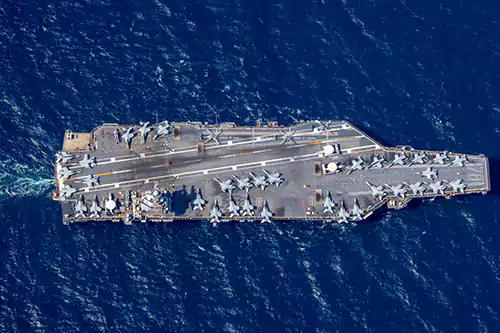
An economic analyst said the US behavior in the naval blockade not only has no compliance with international law, but one of its main goals is to exert economic pressure on China and endanger its energy supplies.
Musa Shahbazi, speaking with IRNA about Donald Trump’s recent statements that “we are engaged in piracy and seizing Iranian ships,” stated: Firstly, in terms of rules, our behavior in the Strait of Hormuz is fully compliant with maritime law regimes. In 1993, a law was passed in the Islamic Consultative Assembly based on international rules of “innocent passage” through straits. Passage must be innocent, meaning the security of the Islamic Republic of Iran must be ensured. After the imposed war, our security was endangered. To protect the stable and long-term security of the Islamic Republic of Iran, our actions in the strait have been fully compliant with international rules.
He continued: The other side has so far acted completely contrary to all international law rules, regimes, and conventions. And has explicitly said, “I attacked. Now because you have closed the Strait of Hormuz to pressure you, I am saying no ship should pass.” This has no basis or rule in the international system.
This economic expert stated: Some US actions have a legal facade. For example, they say, “The International Atomic Energy Agency has issued a report and expressed concern.” And since the IAEA is a reputable legal body — even though it writes falsehoods — it is still a body that has issued a report, based on which one can get a resolution at the Security Council and take action against a country. But this recent US action regarding the blockade has no compliance with the law. It doesn’t even have a legal facade. It is completely contrary to all legal and maritime rules and regimes.
Shahbazi clarified: In terms of impact, because the US has realized that the Islamic Republic of Iran is completely determined on the Strait of Hormuz issue and wants to exercise sovereignty in this region, it is seeking a way to counter it. This economic expert emphasized: Today, more than two months after the start of the war and US aggression against Iran, the impact of the Strait of Hormuz on the energy market, food security, and US bonds has become clearly evident, and international think tanks within the US all believe that prolonging the closure of the strait for more than 5 months or the continuation of the war will harm the global economy, inflation, and global growth.
Shahbazi continued: The White House, aware of the economic consequences of closing the Strait of Hormuz, is seeking the least costly way to solve the problem and currently has no plan for a new military attack; of course, it might in the future, but currently it is pursuing the strategy of putting Iran under political, economic, and decision-making pressure through a naval blockade.
The analyst explained Trump’s goal from this action as: First, to exert economic pressure on Iran within the framework of the puzzle he has defined; second, not to impose the cost of direct war on the US budget and avoid internal problems and disputes with Democrats in this regard; and third, to continue economic pressure on China.
However, he did not consider pressuring China to be Trump’s main goal from the naval blockade of Iran and said: Of course, the US wants to endanger China’s energy artery and through this, prevent part of its economic growth. Shahbazi further clarified: The US, by intensifying economic pressures through naval conflict, wants to put the Islamic Republic of Iran on a path where it either opens the Strait of Hormuz itself or agrees to a deal favorable to the US, because the US is looking for an opportunity to withdraw from this battle with a feeling of victory and power.
Shahbazi, in response to the question of what consequences this admission has for the future of global trade from the perspective of global trade, and whether other countries can also seize the goods and assets of other countries under similar pretexts, said: From the perspective of impact on global markets and maritime trade, it definitely has a negative effect and will cause the Islamic Republic of Iran to increase its power and strictness in the strait. So it will not facilitate passage through the strait.
This economic expert, stating that the blockade affects both the country of origin and the destination country, said: One country emphasized: The US wants to simultaneously put pressure on the export and import origins and destinations of the Islamic Republic of Iran, so new players will enter the blockade arena, and it seems that China will certainly be affected by this practice.



ارسال دیدگاه
مجموع دیدگاهها : 0در انتظار بررسی : 0انتشار یافته : 0