Iran vows decisive response as Trump threatens retaliation
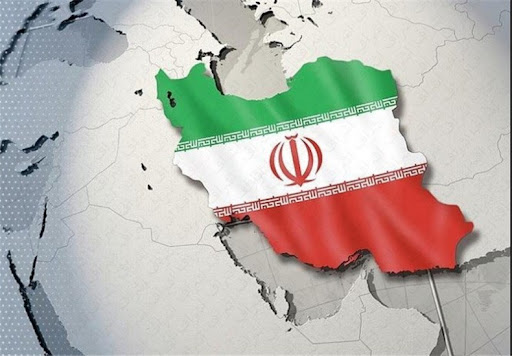
Iran has warned that any further US attack would trigger a response “dozens of times stronger,” as an Iranian official told Reuters that Tehran considers the latest exchange of fire with Washington limited and contained, even as President Donald Trump threatened to strike Iran “very hard” and the conflict increasingly exposes the White House to military, economic and political risks.
The Iranian official, speaking to Reuters on Monday, said Tehran’s retaliatory operation following a US strike on Iranian missile launchers on Larak Island demonstrated that “no target in the region is beyond Tehran’s reach.” The official said Iran would respond with significantly greater force to any further American attack.
The official also warned that conditions in the Strait of Hormuz would become more difficult for vessels that violate the rules. At the same time, the official characterized the latest confrontation as “limited and contained,” suggesting that Iran does not currently regard the exchange as the beginning of a broader war.
The comments came after Iran launched attacks on US positions in Jordan and the United Arab Emirates in retaliation for the American strike on Larak Island, according to reports. The US operation targeted two Iranian launchers that Washington claimed could be used to deploy missiles carrying sea mines in the strategically vital Strait of Hormuz.
Trump, however, adopted a more confrontational tone.
Speaking to Fox News on Monday, the US president said Washington would respond to Iran’s attacks and “hit them very hard.”
Trump separately intensified his rhetoric on social media, describing Iran as a “failed country” and claiming that its military and economic institutions had been severely weakened by the conflict and US sanctions.
Despite the threats, Trump did not completely rule out diplomacy. His remarks reflected the increasingly difficult balance facing the administration as it seeks to pressure Tehran while avoiding a conflict that could become significantly more costly.
The challenge is particularly acute because the war has disrupted one of the world’s most important energy corridors. The Strait of Hormuz, through which roughly 20% of global oil flows under normal conditions, has remained at the center of the confrontation. Oil prices rose more than 2% on Monday after the latest US-Iran exchanges, with markets again reacting to the prospect of prolonged disruption to energy shipments.
The economic consequences are also becoming an increasingly sensitive political issue inside the United States. US gasoline prices have remained above $4 a gallon, roughly $1 higher than a year earlier, according to Reuters. The rise has placed additional pressure on American consumers and complicated Trump’s efforts to campaign on lowering the cost of living ahead of November’s congressional midterm elections.
Reuters reported last week that Trump was preparing to meet US refiners and fuel retailers to reduce gasoline prices before the elections.

ارسال دیدگاه
مجموع دیدگاهها : 0در انتظار بررسی : 0انتشار یافته : ۰